When Regent’s Park was laid out in north London in the early nineteenth century, it was not designed as a public health intervention. Yet the evidence accumulated over the following two centuries suggests that urban parks and green spaces function as precisely that — measurable contributors to cardiovascular health for the populations that have access to them.
The relationship between green space and cardiovascular outcomes operates through several distinct pathways. Understanding those pathways matters for urban planners, public health practitioners, and policymakers making decisions about how European cities use land.
Physical Activity
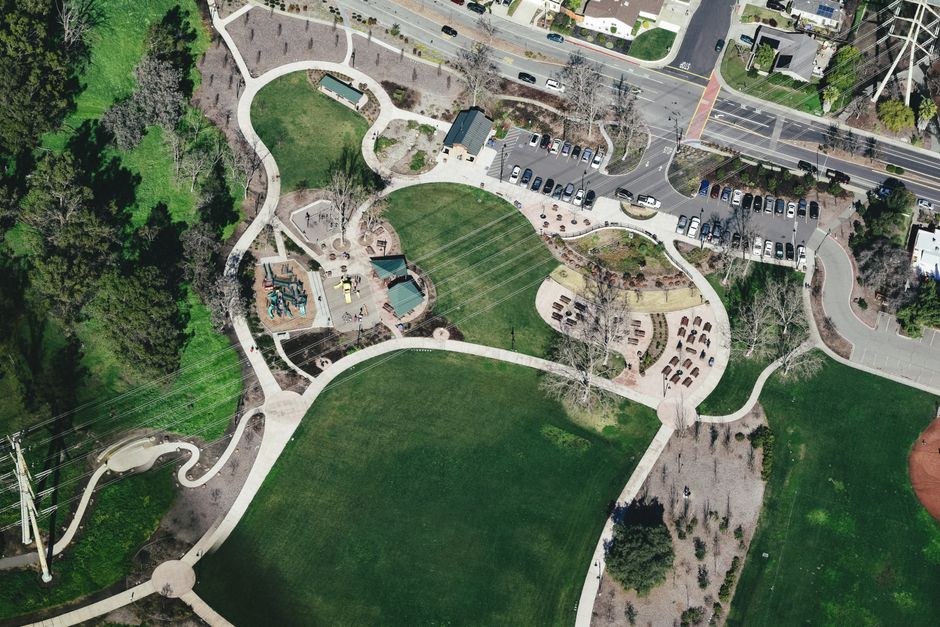
The most obvious mechanism is physical activity. Parks, trails, and green corridors provide environments where walking, cycling, running, and informal exercise are possible. Access to these spaces — particularly when they are safe, well-maintained, and close to residential areas — is consistently associated with higher levels of recreational physical activity among local residents.
Physical inactivity is one of the four principal modifiable risk factors for cardiovascular disease. Regular moderate physical activity reduces cardiovascular risk through multiple mechanisms: it lowers resting blood pressure, improves lipid profiles, reduces inflammation, improves insulin sensitivity, and supports healthy weight maintenance. These benefits are strongest in areas where the built environment already places residents at elevated cardiovascular risk. A 2021 meta-analysis in The Lancet found that each additional hour of moderate physical activity per week was associated with a six percent reduction in major cardiovascular events.
Stress Reduction and Air Quality
Green environments also reduce cardiovascular risk through physiological stress pathways. Exposure to natural settings consistently lowers cortisol levels, reduces heart rate and blood pressure, and activates the parasympathetic nervous system. Research in Amsterdam and Copenhagen has found that residents of neighbourhoods with higher green space coverage report lower perceived stress and show better cardiovascular biomarkers, even after controlling for income and other confounders.
Trees and vegetation improve air quality by absorbing particulate matter and reducing ozone levels. Ambient air pollution is an established cardiovascular risk factor: long-term exposure to fine particulate matter increases the risk of coronary artery disease, stroke, and cardiovascular mortality. European cities, particularly in southern and eastern regions, regularly record PM2.5 levels above WHO guideline values. Green infrastructure also mitigates urban heat island effects, reducing heat-related cardiovascular mortality during heatwaves — increasingly frequent under climate change.
The Green Gentrification Problem
The evidence for green space as a cardiovascular intervention is strong, but its policy application is complicated by a well-documented phenomenon: green gentrification. When parks and green infrastructure are added to previously deprived urban neighbourhoods, property values typically rise. Rising values displace the lower-income residents who were supposed to benefit from the health investment.
Research in Barcelona, Berlin, and Amsterdam has documented this displacement effect, raising important questions about whether urban greening programmes designed to reduce health inequalities actually succeed, or merely shift the geography of inequality. The policy response requires that green space investment be accompanied by affordable housing protections. Copenhagen and Amsterdam have developed more sophisticated approaches to preventing green gentrification, integrating housing affordability requirements directly into urban greening schemes.
What Madrid Shows
In Madrid, the distribution of accessible green space maps closely onto the socioeconomic geography of the city. Wealthier northern districts have substantially higher green space per capita than southern peripheral areas like Villaverde, where the community health infrastructure is also sparser. The HHH Project’s spatial analysis confirmed that green space access was inversely correlated with cardiovascular mortality at the district level — a finding consistent with the international literature, and with the specific cardiovascular inequality patterns documented across the city.
Green space provision is not a simple cardiovascular intervention, and it sits within a broader set of social determinants that shape cardiovascular risk at the population level. It is a complex urban policy question with clear potential for benefit and real risk of harm if not designed with equity explicitly in mind. But the evidence is clear enough that its absence in the city’s most deprived neighbourhoods is not a neutral fact. It is a policy choice with measurable health consequences.