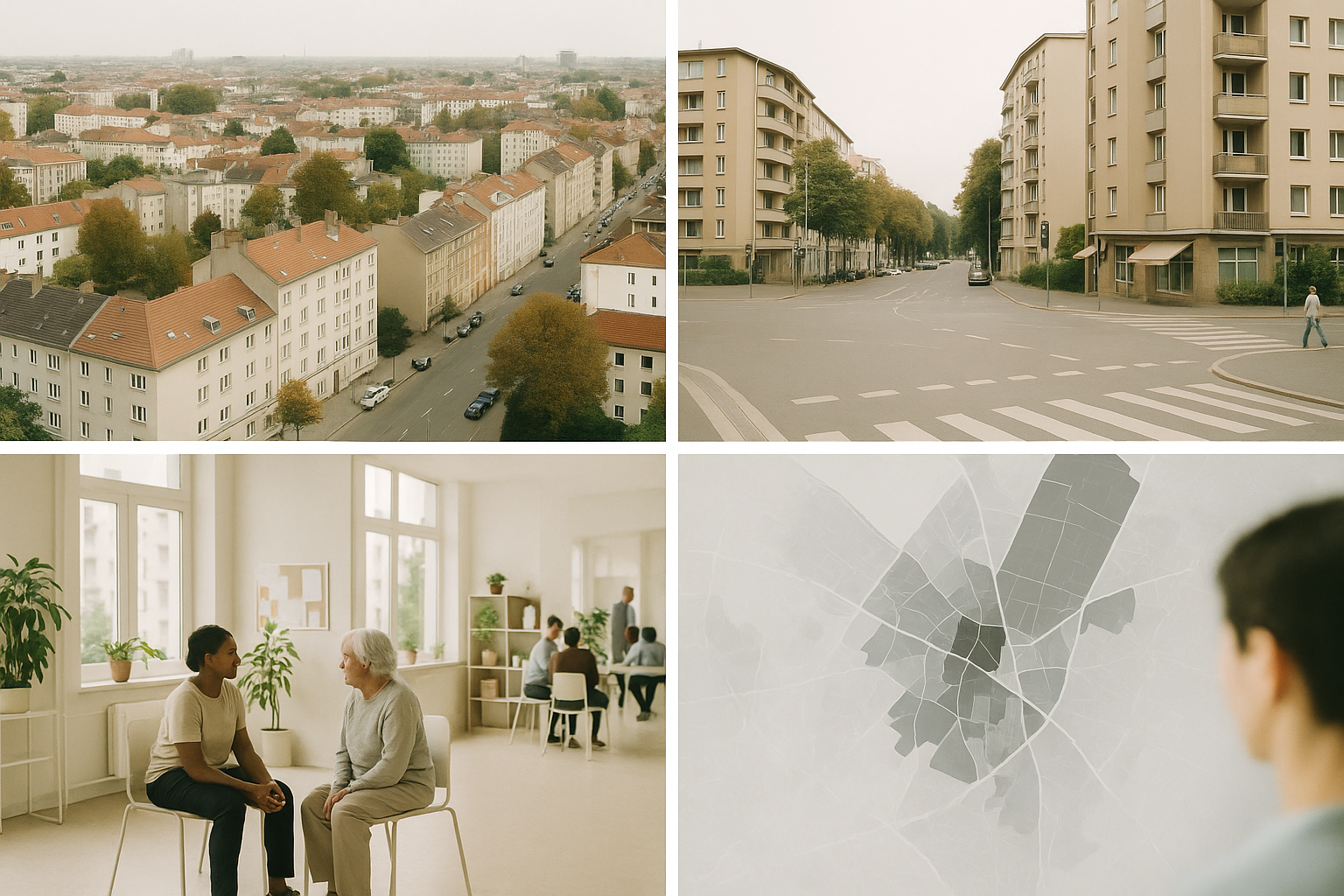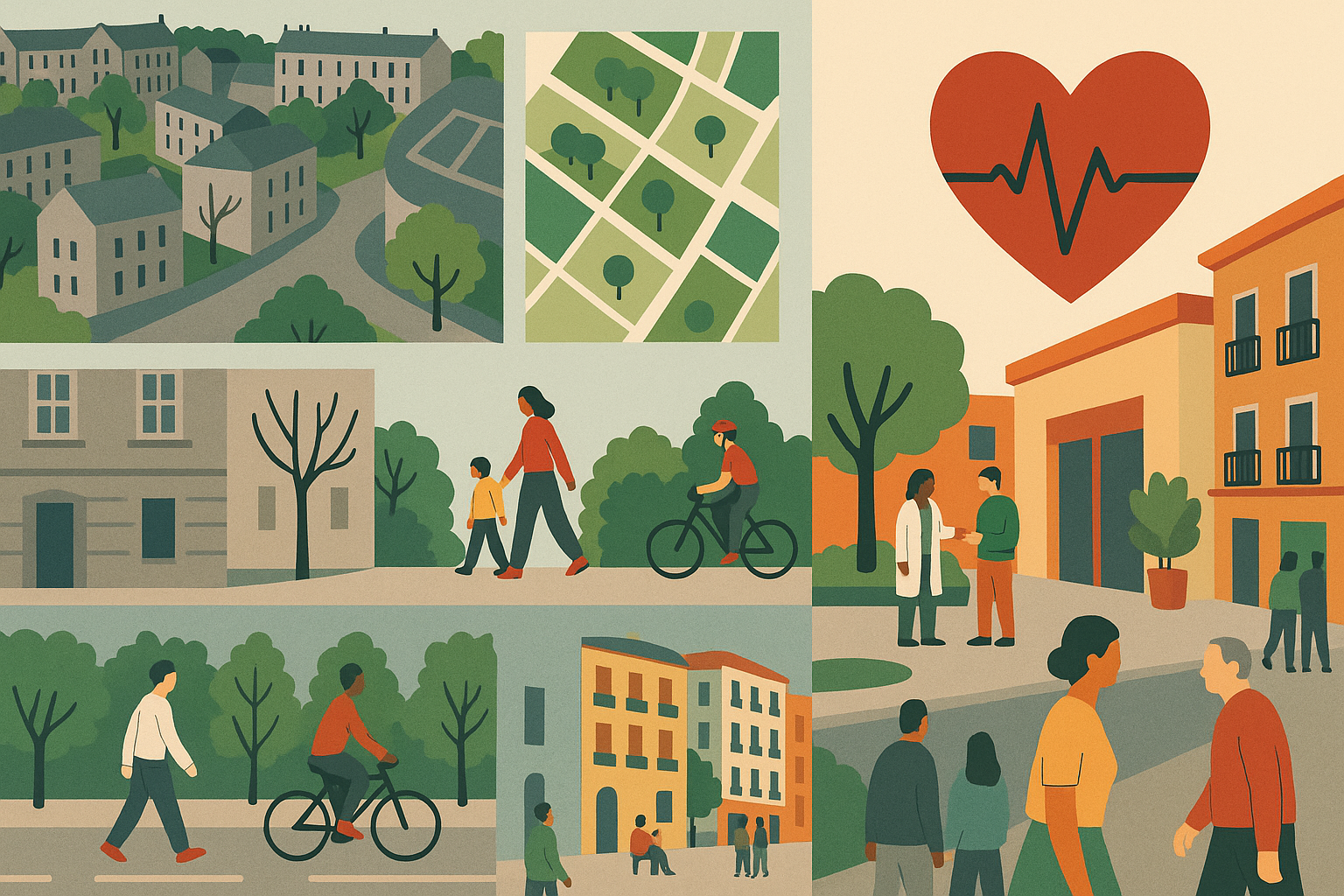
Walking through the winding closes of Edinburgh or the bustling calles of Madrid, it becomes clear that urban walkability and heart health intersect in powerful, sometimes surprising ways. The fabric of a city—its pavements, crossings, parks, and neighbourhood rhythms—can shape how easily people move, how much they move, and ultimately, how their hearts fare. Recent research, including findings from the European Heart Journal and the HHH Project, makes it clear: where you live in a European city can be as important as how you live when it comes to cardiovascular disease (CVD) risk. But the story of walkability is nuanced, especially when comparing two cities as different as Edinburgh and Madrid.
Urban Walkability, Heart Health, and the European Context
The concept of urban walkability refers to how friendly an area is to walking, considering factors like street connectivity, pavement quality, density, destinations within reach, and the safety or comfort a neighbourhood provides. Studies from the WHO and European urban health initiatives consistently link higher walkability to increased physical activity and lower rates of heart disease. Yet, these benefits are not shared equally. In Edinburgh, neighbourhoods such as Leith and Morningside offer contrasting experiences—ranging from well-connected, mixed-use streets to more car-dependent layouts. In Madrid, dense districts like Chamberí and the sprawling suburbs of Villaverde present their own dichotomies. Research from the HHH Project has shown that both the physical and social environments of these urban areas fundamentally influence cardiovascular risk.
One large-scale European study published in the European Heart Journal highlighted that living in walkable neighbourhoods is associated with higher rates of daily walking, lower body mass index (BMI), and reduced incidence of hypertension. Yet, the same study cautioned that walkability’s heart health benefits are limited by social inequalities, access to services, and exposure to pollution—a critical reminder that well-paved streets alone do not guarantee healthier hearts.
Contrasting Urban Designs: Edinburgh’s Winding Streets and Madrid’s Gridded Plan
The bones of a city—its streets, blocks, parks, and public spaces—determine how walkable it feels. Edinburgh’s historic centre, shaped by centuries of organic growth, features narrow alleys, steep hills, and irregular intersections. For many, especially older adults or people with limited mobility, these features present real barriers to walking. Residents of Edinburgh’s peripheral housing estates, often built in the mid-20th century, contend with cul-de-sacs, patchy pavements, and a lack of nearby shops or services. Recent research published by the Scottish Collaboration for Public Health Research and Policy highlights that these environmental obstacles often correlate with lower physical activity and higher CVD risk, particularly in economically disadvantaged areas.
Madrid, on the other hand, is the archetype of the dense, gridded European city. Its central barrios offer fine-grained, mixed-use blocks with frequent crossings, wide pavements, and a Mediterranean street life that encourages walking as both necessity and pleasure. Even so, the city’s outer districts—products of rapid 20th-century expansion—often lack this walkable charm. Studies from the Universidad Autónoma de Madrid and the HHH Project document how neighbourhoods like Villaverde, while denser than Edinburgh’s suburbs, still struggle with traffic-dominated roads and a scarcity of pedestrian-friendly routes. These contrasts echo through rates of physical activity and, ultimately, heart health outcomes.
Socioeconomic Disparities in Walkability
One of the clearest patterns to emerge from cross-European research is that walkability—and its benefits for heart health—are unevenly distributed. In Edinburgh, affluent districts like the New Town or Marchmont offer residents leafy avenues, frequent shops, and safe crossings. The city’s deprived areas, however, often lack the infrastructure and public investment that make walking pleasant or practical. Madrid’s inequalities manifest differently: while inner districts are generally walkable, some southern barrios and working-class suburbs report neglected pavements and poorly maintained public spaces. These disparities are closely entwined with socioeconomic status and cardiovascular outcomes, as shown by multiple HHH Project studies.
Neighbourhood Environments: Beyond Pavements and Parks
Walkability is more than just a matter of pavement width or street lighting. The social and environmental context—safety, air quality, noise, and access to everyday destinations—shape whether people actually walk and how it affects their heart health. In Edinburgh, air pollution hotspots, especially along major roads like Princes Street and London Road, can undermine the health benefits of walking. Research in the Journal of Urban Health has linked fine particulate exposure to increased CVD risk, even in cities with otherwise strong walkability credentials. Edinburgh and Madrid both struggle with air pollution’s hidden toll on cardiovascular health.
Noisy streets also deter walking, especially among older residents or those with existing health conditions. Madrid’s city centre, while extremely walkable on paper, suffers from high levels of traffic-related noise. This is more than a nuisance: evidence from the European Society of Cardiology shows that chronic exposure to urban noise contributes to hypertension and, over time, increased CVD risk. For a deeper look at how noise shapes neighbourhood heart health, consider the everyday experience of living above a busy Madrid thoroughfare compared to a quieter Edinburgh crescent.
Everyday Destinations and Social Life
Access to shops, services, and green spaces makes walking purposeful as well as pleasant. In Madrid’s barrios, the density of cafes, markets, playgrounds, and plazas means that walking is woven into daily routines. In contrast, some of Edinburgh’s residential neighbourhoods—especially those built during the car-centric expansion of the postwar era—require longer trips to reach shops or social spaces. This mismatch is visible in studies of food deserts and dietary risk factors for heart disease, which highlight how poor walkability and limited access to healthy food often go hand in hand.
Active Transport, Public Health, and Local Policy
European public health strategies increasingly emphasize active transport—walking, cycling, and the use of public transport—as a lever for reducing heart disease risk. The EU’s Urban Agenda and the WHO’s Healthy Cities initiative both highlight the importance of walkable neighbourhoods in achieving population-level health gains. In practice, however, the translation from policy to pavement is challenging.
Edinburgh has invested in expanding pedestrian zones and improving crossings in recent years, particularly in the city centre and certain arterial corridors. But gaps remain, especially in outlying estates where car-dependency is entrenched. Madrid’s policy push, including the pedestrianization of Gran Vía and the expansion of cycling infrastructure, has made headlines and brought tangible improvements in central districts. But the periphery—where rates of CVD are often highest—lags behind. The HHH Project’s neighbourhood-level research finds that while policy attention often focuses on the historic cores, health inequalities persist in overlooked suburbs and working-class barrios.
Access to efficient public transport is another piece of the heart health puzzle. Neighbourhoods with reliable buses or metro lines facilitate walking as part of daily commutes and errands. Recent analysis from the HHH Project highlights how public transport access interacts with walkability to shape cardiovascular risk profiles in both Edinburgh and Madrid.
Research Methods: How Do We Measure the Walkability–Heart Health Link?
Understanding the relationship between walkability and heart health requires careful, place-based research. The HHH Project and similar initiatives use a mix of quantitative and qualitative methods: geographic mapping of walkability indices, surveys of physical activity, and the analysis of health records linked to neighbourhood characteristics. Participatory approaches—like Photovoice—allow residents to document the strengths and barriers in their own environments, providing insight that goes beyond GIS data or traffic counts.
Researchers now recognize the importance of intersectionality: the ways that age, gender, disability, and socioeconomic status mediate the benefits of walkable environments. For example, an elderly resident living in a highly walkable Madrid barrio may still face obstacles if poorly maintained pavements or fear of crime deter them from venturing out. Similarly, a parent in an Edinburgh suburb with limited crossings or heavy traffic may find walking with young children challenging, despite living near parks or schools. By combining objective and lived-experience measures, urban health research can better guide local interventions and policies.
Lessons from Edinburgh and Madrid: Towards More Equitable Heart Health
The contrasts between Edinburgh and Madrid demonstrate that walkability cannot be understood—or improved—in isolation. Built form matters, but so do social factors, public investment, and the broader urban context. Efforts to promote heart health through urban design must grapple with entrenched inequalities, from the legacy of housing policies to contemporary patterns of gentrification and austerity.
In both cities, neighbourhoods with high walkability, strong social ties, and good access to services report better cardiovascular outcomes. Yet, the persistent gaps between affluent and deprived districts remain a stubborn challenge. As the HHH Project notes in its comparative analyses, tackling urban cardiovascular inequities requires not just more walkable streets, but also targeted investments in neglected areas, robust social policies, and a recognition of the complex ways that place shapes health.
Edinburgh and Madrid offer different urban lessons, but both remind us that healthy hearts depend as much on the environment as on individual choices. By learning from these contrasts, European cities can move toward more inclusive, walkable, and heart-healthy futures.