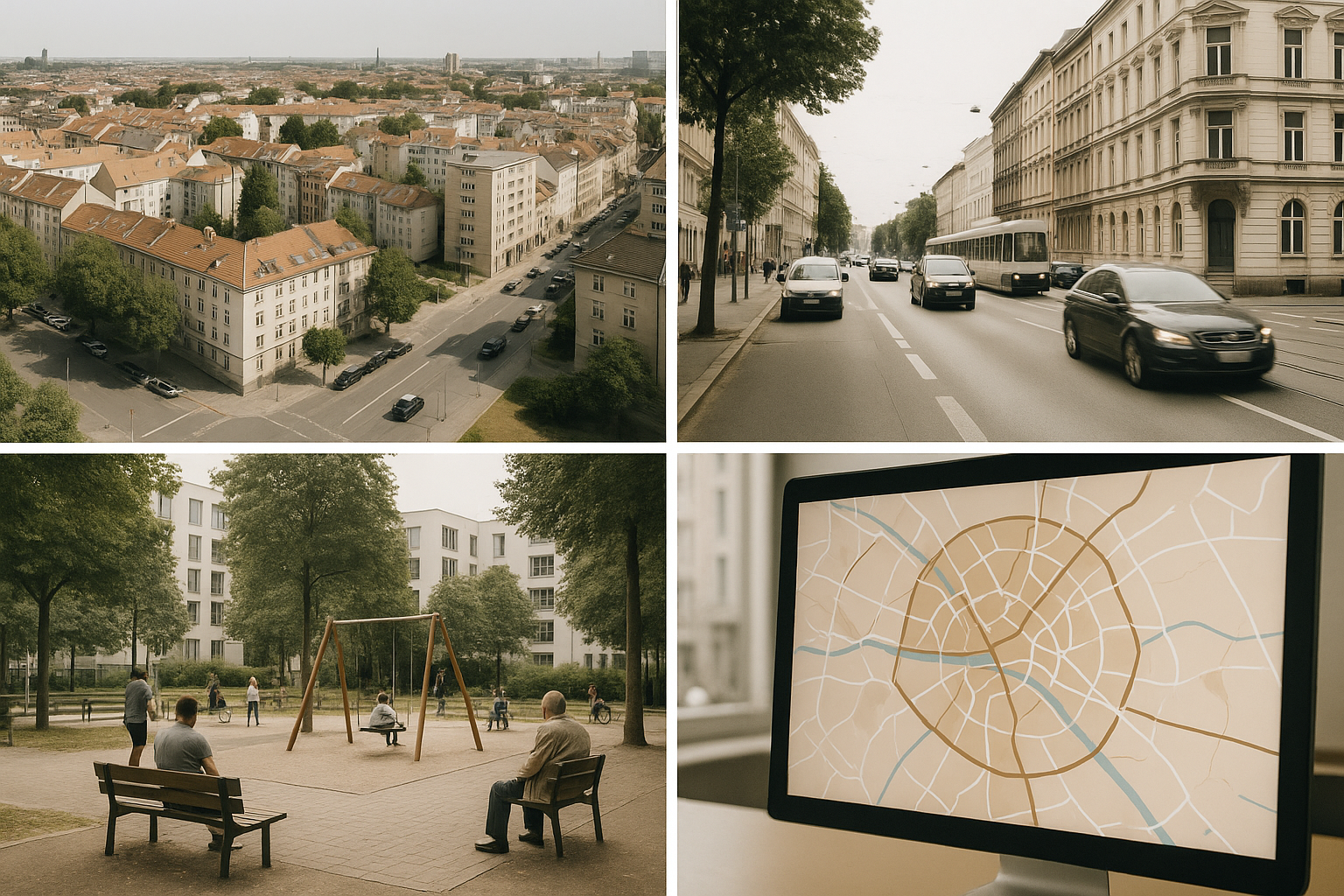
Walk through the north of Edinburgh or the southern districts of Madrid, and you’ll find the phrase food deserts heart disease is more than public health jargon — it’s a lived reality. At first glance, the rolling closes of Leith or the densely packed streets of Villaverde might offer little more than a handful of corner shops or chain supermarkets. But behind these façades lie enormous differences in who has access to fresh produce, whole grains, and healthy protein sources — and who doesn’t. Recent research in the European Heart Journal and European public health projects, including the HHH Project, increasingly points to the neighbourhood food environment as a critical link between city living and cardiovascular health.
How Food Deserts Take Shape in European Cities
The classic image of a food desert comes from American inner cities — vast stretches without a supermarket in sight. In Europe, the story is more nuanced. While outright supermarket absence is uncommon, many urban areas remain underserved by affordable shops that stock fresh fruits, vegetables, fish, and whole grains. Instead, they may be saturated with fast food outlets, bakeries selling processed snacks, or convenience stores peddling ultra-processed foods.
Edinburgh’s peripheral neighbourhoods illustrate this perfectly. A 2018 analysis by NHS Health Scotland mapped supermarket density and found that, though most city districts had a shop within one kilometre, the quality and price of healthy food options varied sharply by postcode. Meanwhile, research coordinated by the Universidad Autónoma de Madrid has mapped similar disparities in access across Madrid, with southern barrios like Usera and Villaverde facing fewer large fresh-food retailers and a higher density of outlets selling calorie-dense, nutrient-poor snacks.
Food Deserts, Heart Disease, and the Urban Diet
Why do food deserts matter so much for heart health? It comes down to dietary risk factors: high salt intake, low fruit and vegetable consumption, excess saturated fat, and frequent consumption of sugary or processed foods. All are established drivers of hypertension, obesity, and high cholesterol, which in turn accelerate the risk of cardiovascular disease (CVD) — Europe’s leading cause of death, according to the World Health Organization.
In Edinburgh, a 2021 study published in Public Health Nutrition linked local food retail patterns with self-reported diet quality and CVD risk. Residents of areas with more fast food outlets and fewer greengrocers were more likely to report low fruit and vegetable intake, even after controlling for household income. Madrid tells a comparable story. Findings from the HHH Project show that neighbourhoods in the south, where access to affordable healthy food is limited, also report higher rates of obesity and hypertension, key precursors to heart disease.
Neighbourhood Environments and Social Determinants
Food deserts don’t develop in isolation. They are deeply entangled with broader social determinants of health — patterns of poverty, employment, mobility, and discrimination that shape the urban landscape. Both Edinburgh and Madrid display stark socioeconomic gradients in CVD outcomes, as detailed in the HHH Project’s comparative work on heart health inequality between the two cities.
Neighbourhoods with persistent deprivation are not only more likely to be food deserts but also face compounding challenges: limited green spaces, elevated air pollution, and reduced access to affordable public transport. Each of these factors interacts with food access. For example, low-paid shift work or long commutes leave little time for shopping or preparing healthy meals. Reliance on public transport to reach distant supermarkets can pose a substantial barrier, as explored in recent research on public transport and heart health. The result is a geography of risk, where diet-related heart disease is mapped onto the city’s invisible socioeconomic borders.
The Role of Urban Planning and Local Policy
Can cities do anything to reverse food deserts and their cardiovascular consequences? European evidence suggests that urban planning and local policy matter. In Madrid, the city council has piloted mobile markets and subsidies for fresh food retailers in underserved barrios, aiming to break the cycle of unhealthy food environments. However, early evaluations suggest that price and convenience still outweigh healthy intentions for many busy families.
Edinburgh’s approach has leaned toward zoning restrictions — limiting the density of new fast food outlets in areas already saturated with unhealthy food options. This policy, backed by evidence from the Scottish Public Health Observatory, has the potential to slow the proliferation of poor-quality food environments, but implementation is patchy and often meets commercial resistance. There’s also a growing recognition that food environments must be considered alongside other CVD drivers: for instance, integrating changes to food retail with initiatives on urban green space design and restrictions on tobacco and alcohol outlets.
Mapping the Path Forward for Healthier Urban Diets
Breaking the link between food deserts and heart disease in Europe’s cities will not be quick or easy. The underlying drivers — poverty, urban segregation, and the economics of food retail — run deep. But research from both Edinburgh and Madrid is shaping a new consensus: that cardiovascular health depends as much on neighbourhood context as on individual choice. Approaches that combine improved food access with wider investments in social infrastructure show promise.
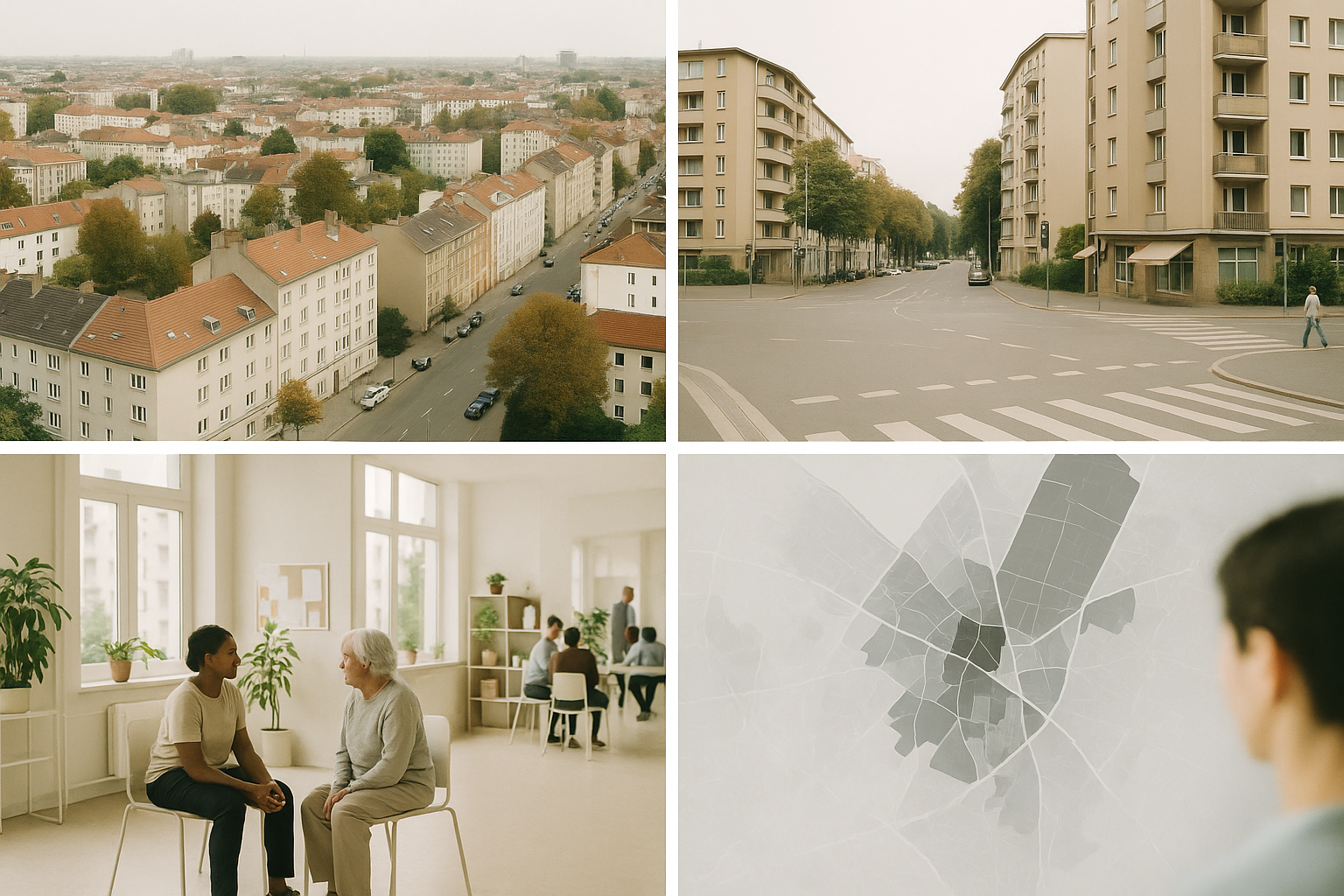
What’s needed now is sharper coordination between health, transport, housing, and food policy. Interventions must be tailored to the micro-geography of each city: what works for Leith may not fit Villaverde. And as mapping projects have shown, revealing the hidden geography of risk is a vital first step — only then can cities dismantle the structural barriers to healthy diets. For those interested in how research translates into local action, the story of community health initiatives in Madrid’s south offers a blueprint for neighbourhood-driven change. In the end, tackling food deserts is as much about democracy, equity, and belonging as it is about nutrition or heart disease alone.