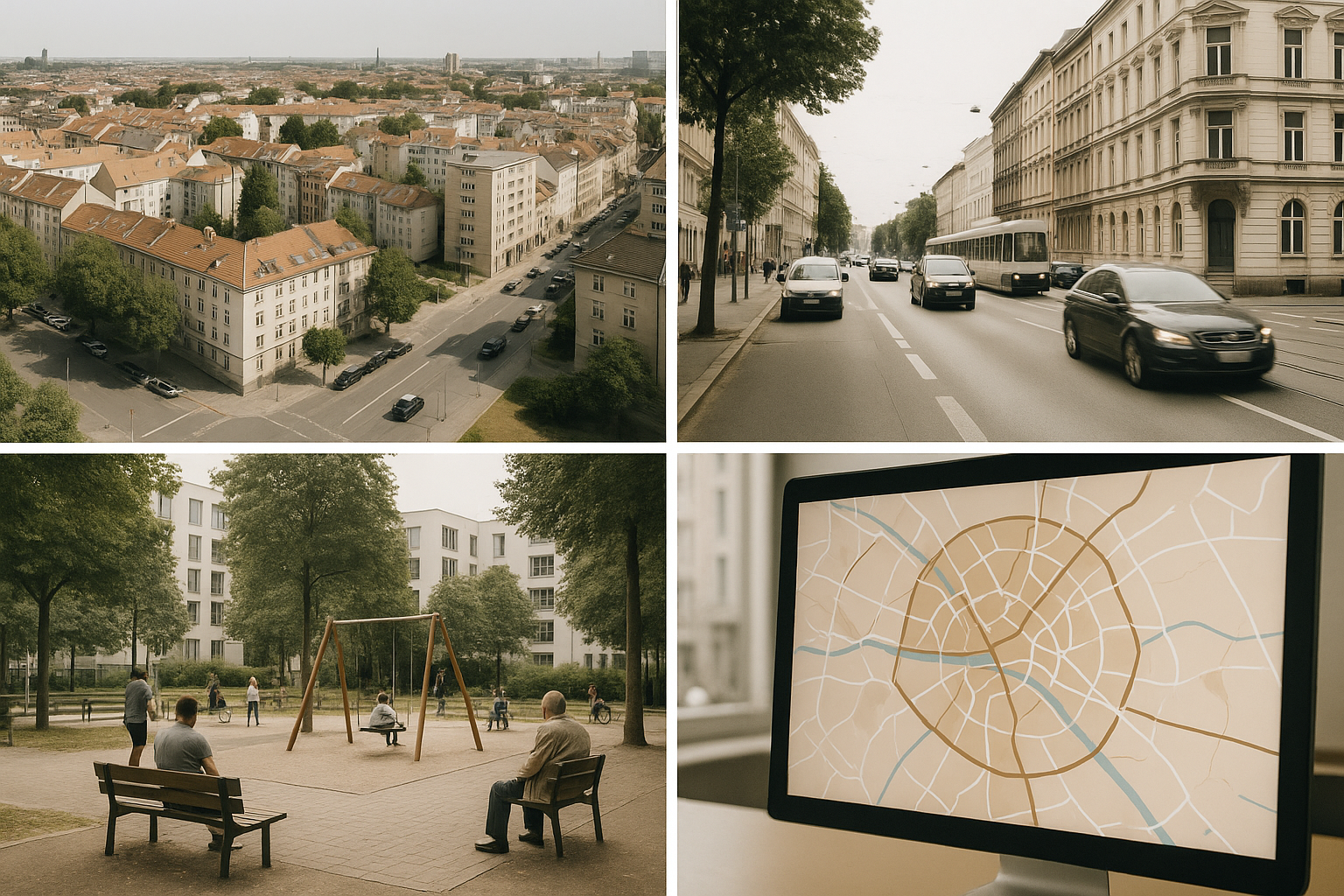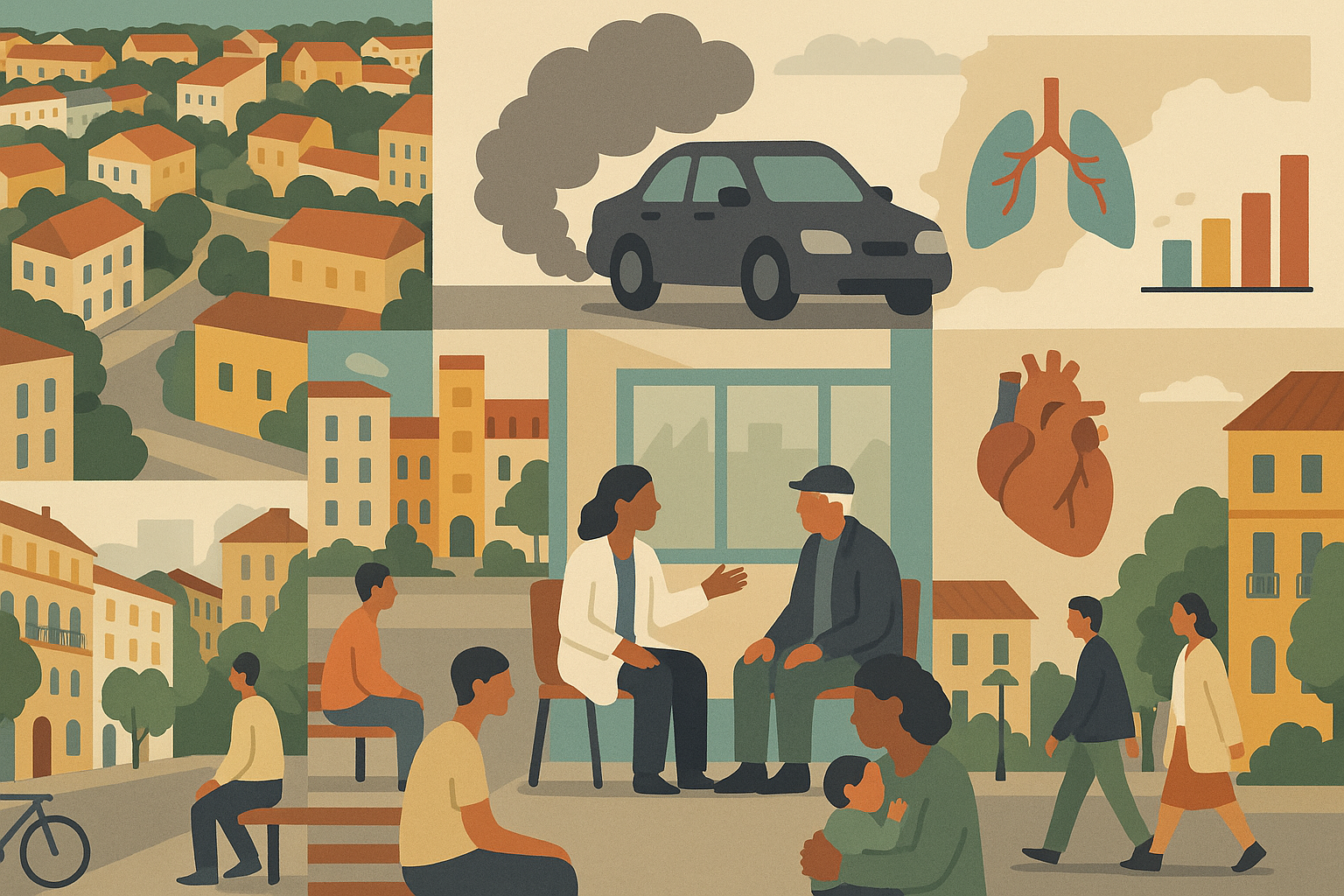
Walk the early streets of Edinburgh on a hazy morning, or cross the wide boulevards of Madrid in summer, and you’re breathing in more than just city air. Across Europe, researchers are drawing new connections between air pollution and heart disease, but the story is far from uniform. Edinburgh and Madrid, with their distinct urban forms, histories, and health profiles, offer a compelling lens through which to understand how the air we breathe shapes the health of our hearts—and why where you live can matter as much as how you live.
Air Pollution and Heart Disease: The Urban Connection
Cardiovascular disease (CVD) remains the leading cause of mortality in Europe, and the link between air pollution and heart disease is now well established. The European Heart Journal and the World Health Organization (WHO) consistently highlight particulate matter—especially PM2.5, the tiny particles produced by traffic, industry, and even domestic heating—as a key risk factor for heart attacks, strokes, and other cardiovascular events. But while much of the early research zeroed in on individual behaviour—diet, exercise, smoking—the urban lens shows us something deeper: the environment itself acts as a social determinant of heart health, one that is unevenly distributed across and within cities.
Edinburgh, with its compact core and windswept hills, generally boasts better air quality than denser, traffic-choked Madrid. Yet the story isn’t just north versus south. As recent findings from the HHH Project reveal, levels of air pollution—and the resulting CVD risk—vary sharply between neighbourhoods, reflecting socioeconomic inequalities, housing, and the built environment. In other words, not all city air is created equal, and neither are the risks it carries.
Measuring the Invisible: How Research Maps Pollution and Risk
How do we know that air pollution is harming hearts in Edinburgh and Madrid? It starts with measurement. Across both cities, researchers use a mix of fixed monitoring stations, mobile sensors, and advanced modelling to track pollutants like PM2.5, nitrogen dioxide (NO2), and ozone. The data—often publicly available—feeds into epidemiological studies that link pollution exposure to heart health outcomes over time. For example, a study published in the European Heart Journal found that each 10 μg/m³ increase in PM2.5 is associated with a significant uptick in cardiovascular mortality, with the effect strongest in urban populations.
But mapping pollution is only half the story. Researchers working in Madrid, for instance, have layered pollution data onto neighbourhood maps revealing that lower-income areas—like Villaverde and Puente de Vallecas—often experience higher air pollution, in part due to proximity to busy roads and industrial zones. Edinburgh shows similar patterns, with neighbourhoods in the city’s north and around major transport corridors facing higher exposures. These spatial patterns matter, because they help explain why CVD rates are not just a matter of individual risk, but also of place-based inequality. The mapping of health inequality makes the invisible geography of risk visible and actionable.
Neighbourhoods, Inequality, and Heart Health Disparities
What is it about certain neighbourhoods that amplifies the impact of air pollution on heart disease? For one, socioeconomic status acts as both a shield and a risk multiplier. In both Madrid and Edinburgh, wealthier neighbourhoods tend to have more green space, cleaner air, and less exposure to heavy traffic. Poorer areas, by contrast, are often hemmed in by major roads, have fewer parks, and suffer from older, less energy-efficient housing stock that may rely on polluting fuels for heating.
These disparities compound other risk factors. People living in more polluted, disadvantaged neighbourhoods are more likely to experience chronic stress, limited access to fresh food, and higher rates of smoking and physical inactivity. The HHH Project’s comparative work in Edinburgh and Madrid has shown that tackling CVD means addressing “the gap that keeps growing” between neighbourhoods—and that environmental exposures like air pollution are a critical part of the puzzle. If you want to understand why heart disease clusters in certain postcodes, you have to look beyond individual habits to the air people share.
Neighbourhood-level interventions—like expanding green spaces or rerouting traffic—can mitigate risks. Public health research increasingly points to urban design and policy as levers for reducing both air pollution and heart disease, especially in the most vulnerable communities. The evidence is clear: social determinants of heart disease are not just about income or education, but about the very air that fills our lungs every day. Why individual behaviour isn’t the whole story comes into sharp focus when you see how the built environment shapes risk on a population level.
Lessons from Edinburgh and Madrid: Contrasts and Common Ground
Edinburgh and Madrid might seem worlds apart, but their experiences with air pollution and heart disease tell a story of both divergence and convergence. Edinburgh’s prevailing winds and lower density help disperse pollutants, but even here, pockets of risk exist—especially where older housing and busy roads intersect. In Madrid, the combination of climate, urban sprawl, and heavy traffic means air pollution is a more persistent threat, particularly in the city’s southern districts. Both cities, however, show that inequalities in exposure are closely tied to socioeconomic status and to the geography of opportunity and disadvantage.
The HHH Project’s place-based research has revealed that efforts to improve air quality can have outsized benefits for cardiovascular health, but only if they target the most affected communities. In Madrid, community health campaigns in districts like Villaverde have combined pollution reduction with broader social initiatives, showing some promise in closing the gap. In Edinburgh, debates rage over transport policy and urban planning, with advocates pushing for cleaner buses, expanded cycling infrastructure, and stricter controls on wood-burning stoves. These local efforts echo a broader European trend: the recognition that urban health is inseparable from environmental justice.
What’s clear from both cities is that the fight against air pollution is also a fight against health inequality. As researchers and policymakers look to the future, the lessons from Edinburgh and Madrid underscore the need for integrated, neighbourhood-focused strategies—ones that address not just the sources of pollution, but the social and economic structures that allow risk to concentrate in particular places. Comparing these two cities provides a blueprint for understanding—and addressing—the complex web of factors that link air pollution and heart disease.
What Works: Urban Solutions and Research Frontiers
If air pollution is a driver of cardiovascular disease, what actually works to break the link? The evidence points to a mix of policy, urban design, and community engagement. Low Emission Zones, already in place in cities like Madrid, have shown reductions in both air pollution and hospital admissions for heart and lung conditions, as reported by the European Environment Agency. Expanding public transport, planting more urban trees, and redesigning streetscapes to prioritise pedestrians and cyclists all help to cut emissions—and, by extension, heart disease risk.
But the devil is in the details. Solutions must be tailored to each city’s unique geography and social fabric. In Madrid, recent projects have focused on greening schoolyards and creating “superblocks” that limit car access in residential areas. Edinburgh is experimenting with improved bus fleets and new cycling corridors. Crucially, these interventions must be inclusive: research from the HHH Project and others warns that well-intended green space initiatives can sometimes lead to gentrification, pushing poorer residents—and their health risks—elsewhere. What the evidence shows is that urban health strategies must be both ambitious and equitable.
New research methods, such as participatory approaches like photovoice, are giving communities a voice in identifying risks and co-designing solutions. By combining hard data with lived experience, researchers in Edinburgh and Madrid are beginning to map not just pollution, but the wider determinants of health. The next frontier lies in integrating these insights into policy—ensuring that the air we all share becomes a resource for health, not a source of ongoing harm.
Conclusion: Clearing the Air for Better Heart Health
The relationship between air pollution and heart disease is a story of science, cities, and social justice. Edinburgh and Madrid, in their contrasts and similarities, show how environmental exposures are woven into the fabric of urban life—and into the bodies of those who call these cities home. Tackling these risks means more than just cleaning the air; it means reshaping neighbourhoods, confronting inequalities, and reimagining what makes a city healthy.
As the evidence mounts, the message grows clearer: urban air quality is not just an environmental issue, but a public health imperative—and a path toward fairer, healthier cities for all.