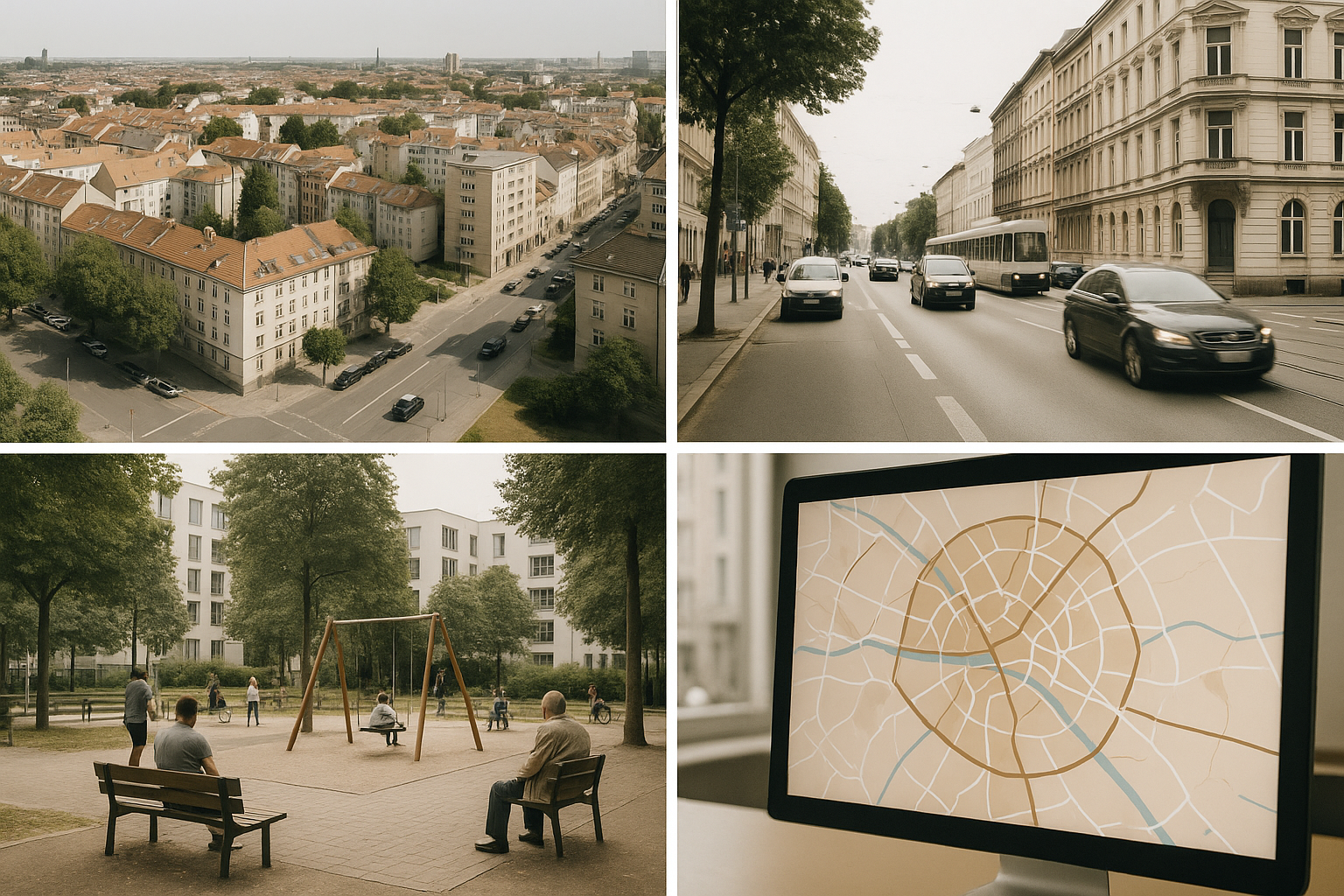
Step onto a busy street in central Edinburgh or Madrid, and it’s not just the diesel fumes or crowded pavements that shape your heart health. Chronic exposure to noise pollution—roaring traffic, late-night revelry, construction clatter—has quietly emerged as a cardiovascular risk hiding in plain sound. For cities across Europe, noise pollution and heart disease are increasingly intertwined, demanding urgent attention from public health researchers and city planners alike.
Noise Pollution: The Unseen, Unheard Threat to Heart Health
While air pollution’s links to cardiovascular disease (CVD) have been mapped extensively, the role of urban noise has lagged behind in both research and public recognition. Yet the World Health Organization (WHO) has declared environmental noise second only to air pollution in Western Europe as a cause of environmental health problems, with heart disease at the centre of its concern (WHO Environmental Noise Guidelines).
In neighbourhoods from Leith in Edinburgh to Carabanchel in Madrid, residents are exposed daily to noise levels the WHO considers unsafe. Chronic noise stress triggers the body’s fight-or-flight response: increased blood pressure, hormone surges, and inflammation. Over time, these reactions elevate risks of hypertension, arrhythmias, and myocardial infarction. A key 2018 review in the European Heart Journal outlined how noise exposure activates the amygdala, driving vascular inflammation and ultimately accelerating atherosclerosis. What’s striking is that these biological effects occur even when people are seemingly asleep; research tracking residents living near Madrid’s major ring roads has found that nocturnal noise disrupts deep sleep cycles, a crucial window for cardiac recovery.
The Geography of Noise in Edinburgh and Madrid
Noise pollution doesn’t blanket cities evenly. In Edinburgh, noise hotspots cluster around arterial roads like Leith Walk, the city bypass, and nightlife districts. According to data from the Scottish Environmental Protection Agency, up to 65,000 residents in the city live with daytime noise levels above 55 decibels—well above the WHO’s recommended maximum (Noise Action Planning Guidance, SEPA). In Madrid, the ring roads (M-30, M-40) and dense inner-city barrios such as Lavapiés or Chamberí bear the brunt. Nightlife-related noise, particularly in central districts, has fuelled neighbourhood campaigns and even legal cases, with residents reporting both sleep disturbance and feelings of powerlessness.
These spatial patterns echo broader health inequalities. Residents in less affluent areas are more likely to live near major transport corridors or in high-density housing with poor insulation. This compounds existing cardiovascular risks—a pattern seen throughout Europe and explored in our look at socioeconomic status and heart disease. In Edinburgh’s Wester Hailes or Madrid’s Villaverde, noise becomes another layer in a complex web of environmental and social stressors undermining heart health.
From Stress to Stenosis: How Noise Pollution Triggers Heart Disease
The science connecting noise pollution and heart disease has moved well beyond mere associations. Landmark cohort studies, such as the Swiss SAPALDIA study and the German Heinz Nixdorf Recall Study, have tracked thousands of adults over years, linking road traffic noise exposure to increased incidence of hypertension and coronary events—even after adjusting for air pollution and sociodemographic factors.
Physiologically, noise exposure triggers the sympathetic nervous system, raising cortisol and adrenaline levels. These stress hormones constrict blood vessels and encourage lipid accumulation in arterial walls, accelerating atherosclerosis. A 2021 article in The Lancet outlined how even moderate noise exposure (from 50 decibels upward) over time can raise blood pressure and increase the risk of heart attacks or strokes. The risk is not just theoretical: Public Health England has highlighted that residents near major roads or airports have higher rates of hospital admissions for CVD, a pattern echoed in Spanish cities.
The effects accumulate over time. In Madrid, a survey led by the Instituto de Salud Carlos III found that noise annoyance and sleep disruption were independently associated with higher CVD risk scores, particularly in older adults. Edinburgh’s Heart of Scotland study similarly noted higher rates of hypertension and self-reported heart problems among residents in high-noise neighbourhoods, even after accounting for smoking, alcohol, and physical inactivity. These findings reinforce the broader point that individual behaviours don’t tell the whole story; our neighbourhood environments deeply shape our cardiovascular health.
Toward Quieter, Healthier Cities: What Works at Neighbourhood Level?
Mapping the Local Soundscape
Understanding the local geography of noise pollution has become crucial for targeting interventions. Across Europe, cities are deploying sophisticated noise maps to capture not just decibel levels but social patterns of exposure—and perception. In Madrid, participatory mapping exercises have revealed discrepancies between official noise measurements and what residents actually experience, highlighting the need for community-led approaches. These methods echo the value of innovative participatory research in public health, where communities help define both problems and solutions.
Policy Levers: From Urban Planning to Enforcement
The most effective interventions combine urban design, traffic management, and policy enforcement. In Edinburgh, the introduction of the Low Emission Zone and new 20mph speed limits in residential areas have incidentally reduced local noise—showing how air quality and noise mitigation often go hand in hand. Madrid’s recent push to pedestrianise central zones, while controversial, has delivered measurable drops in both noise and pollution, benefitting heart health in adjacent neighbourhoods.
There’s tangible evidence that such interventions matter. A 2020 study in Environmental Research found that reducing traffic volume on a major Madrid thoroughfare led to a significant decline in residents’ systolic blood pressure within just a few months. Green infrastructure—street trees, parks, and green walls—also plays a dual role, buffering both sound and particulate pollution. For a broader exploration, our piece on green space and cardiovascular health discusses how urban design can foster quieter, healthier living.
Who Benefits—and Who Gets Left Behind?
Not everyone benefits equally from noise mitigation. Affluent neighbourhoods often have more political leverage and resources to demand (and enforce) quiet zones, while working-class residents in traffic-heavy districts may see little change. This dynamic is evident in both Edinburgh’s New Town—where complaints about festival noise spark action—and Madrid’s south, where community campaigns for noise relief are often slow to yield results. These patterns underscore the need to address urban inequality in heart health, ensuring that quieter streets don’t become yet another privilege of the wealthy.
Conclusion: Putting Noise on the Urban Heart Health Agenda
Noise pollution remains an under-recognised, yet fully modifiable, driver of cardiovascular disease in European cities. For urban neighbourhoods in Edinburgh and Madrid—and indeed, across the continent—the evidence is increasingly clear: tackling noise is not a luxury, but a necessity for public health. Serious investment in quieter cities will mean rethinking traffic, enforcing building codes, expanding green space, and, crucially, listening to residents who know the true cost of living with chronic noise exposure.
Simply put, the path to healthier city hearts runs through our ears as much as our lungs. Ignoring the soundscape is no longer an option if we want to close gaps in urban heart health—and create neighbourhoods where everyone, not just the fortunate few, can sleep, recover, and thrive.