Photovoice is a participatory action research method in which community members use photography to document their own environment, then collaboratively analyse and discuss what they have captured. The technique was formally developed by Caroline Wang and Mary Ann Burris in 1992, initially in the context of women’s health in rural China, and has since been applied across public health, urban planning, and community development projects worldwide.
Its core principle is simple but significant: the people who live with a problem are often the most authoritative sources of evidence about it.
How Photovoice Works
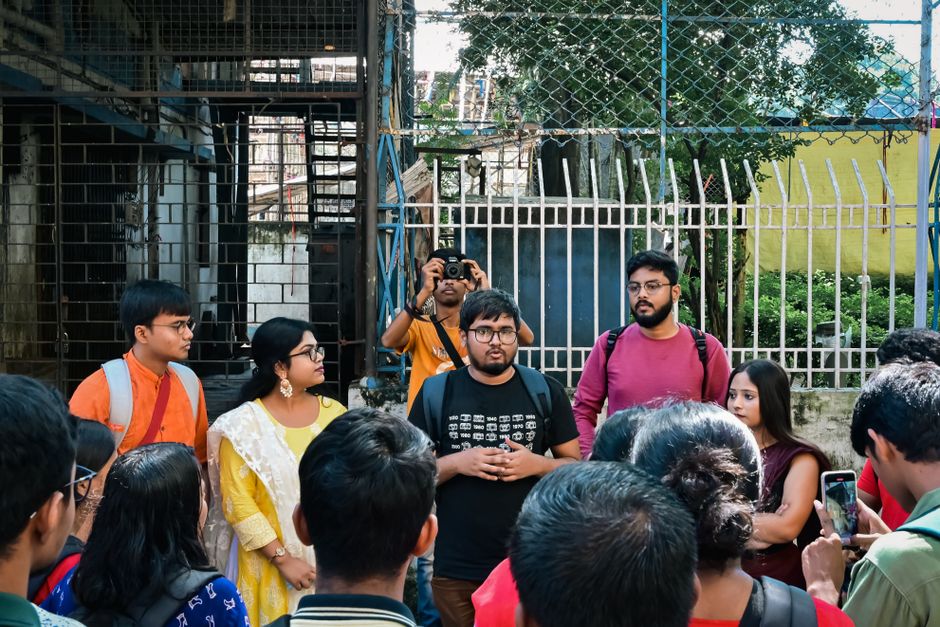
A photovoice project typically begins with a community or group being invited to participate as co-researchers. Participants receive cameras — and today more commonly smartphones — and are asked to photograph aspects of their environment that affect their health, wellbeing, or quality of life. The instruction is deliberately open-ended: participants decide what to document, from cracked pavements and shuttered shops to well-used community gardens and informal meeting places.
The photographs are then brought to group discussions, structured around questions that guide analysis. Wang and Burris developed a framework called SHOWeD, in which participants reflect on what they See in the image, what is Happening, how it relates to Our lives, Why it exists, and what can be Done about it. Through this process, individual observations become collective knowledge, and local knowledge becomes evidence that can be presented to policymakers and researchers.
What Photovoice Reveals That Surveys Cannot
Quantitative health surveys are excellent at measuring how many people smoke, what their blood pressure is, or how often they exercise. They are poorly suited to capturing the texture of daily life in a particular place — the specific intersection that is too dangerous to cross comfortably, the park that residents avoid after dark, the corner shop where tobacco is displayed at a child’s eye level.
Photovoice captures exactly this kind of evidence. It also surfaces the subjective dimensions of neighbourhood experience: what makes a place feel safe or unsafe, welcoming or hostile, health-supporting or health-undermining. These perceptions shape behaviour in ways that objective environmental measurements can miss.
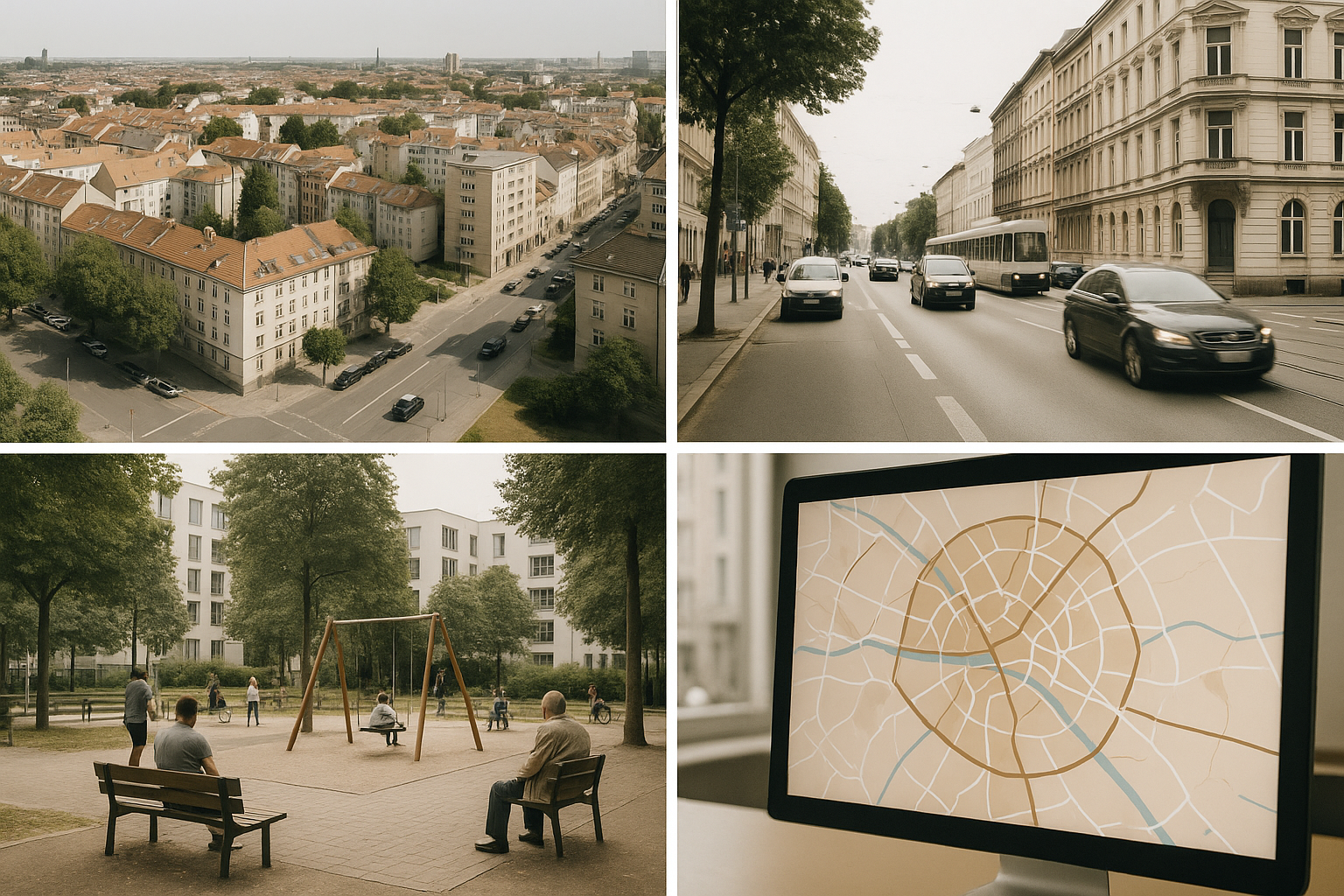
A photovoice project conducted in Edinburgh as part of the HHH research comparing Edinburgh and Madrid found that participants documented features their neighbourhood surveys had not registered: inadequate street lighting on school routes, the density of fast food outlets near transport hubs, and informal social spaces — benches, covered walkways — that provided meaningful social connection for older residents.
Using Photovoice in Madrid
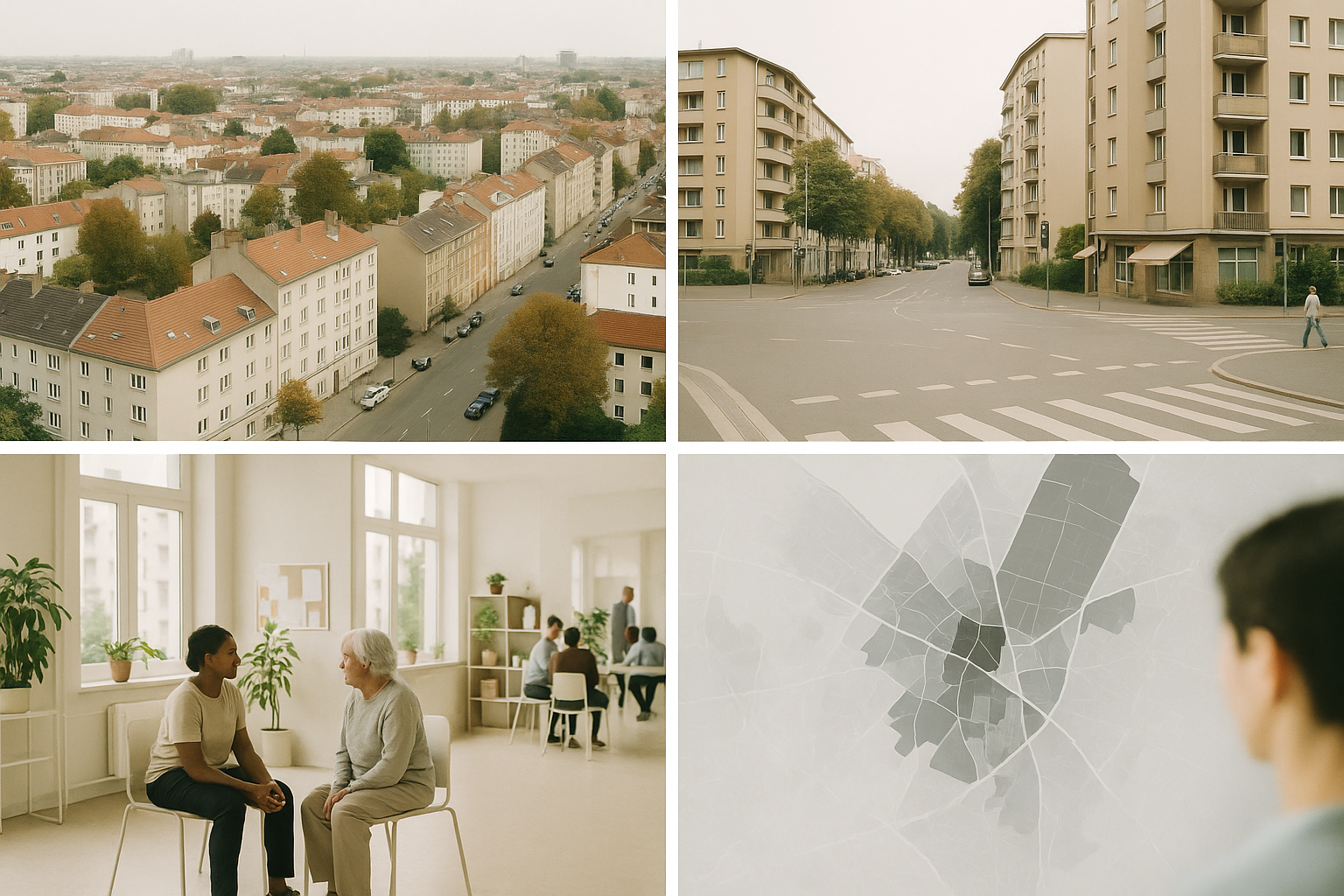
In the Villaverde district of Madrid, photovoice has been used to involve residents in documenting the environmental features of their neighbourhood that they perceive as relevant to health. Villaverde is one of Madrid’s most socioeconomically deprived areas, with measurably higher rates of cardiovascular disease and premature mortality than wealthier districts.
Residents participating in photovoice sessions identified patterns that mapped onto known cardiovascular risk factors: the concentration of tobacco outlets near schools and residential areas and residential areas, limited access to affordable fresh food, deteriorating recreational spaces, and the absence of pedestrian infrastructure that would support active travel. Crucially, participants also identified assets — community health resources, informal social networks — that statistics alone would not have surfaced.
Why It Matters for Public Health
Beyond producing evidence, photovoice serves a political function. Photographs and the narratives attached to them can be presented directly to decision-makers in ways that statistical tables cannot. A photograph of a tobacco advertisement positioned at a child’s eye level at the entrance to a school carries an argumentative weight that a density measure does not.
More fundamentally, photovoice challenges the assumption that research expertise flows from institutions downward to communities. It treats residents as producers of knowledge rather than objects of study, and it generates evidence grounded in lived experience rather than constructed from the outside. That distinction matters when the goal is not just to describe health inequalities but to change them. The cartography of cardiovascular risk that emerges from spatial analysis and the social texture revealed by photovoice are, in the best research, used together.