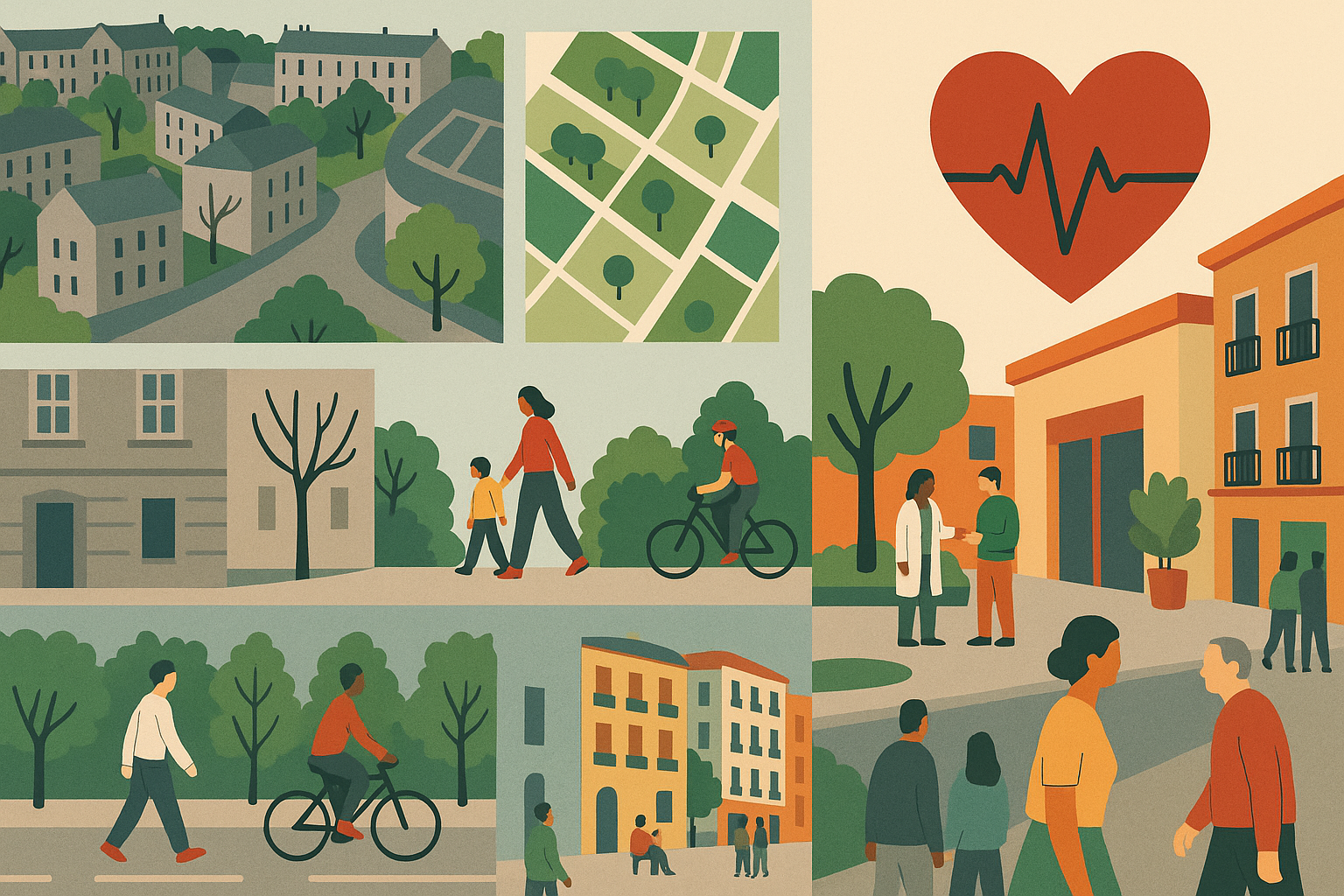
If you walk the winding streets of Edinburgh’s Leith or ride the sprawling Metro in Madrid’s Carabanchel, you’re witnessing a public health experiment playing out in real time. Public transport heart health research is revealing that how we move through cities — or how well we’re able to — can shape our hearts as surely as our genes or our diets. The bus stop around the corner, the train platform five minutes’ walk away: these details matter, especially for the most vulnerable.
Why Public Transport Matters for Heart Health
The European Heart Journal and the WHO have both flagged cardiovascular disease (CVD) as the continent’s leading cause of death. Yet, where you live, work, and travel can tip the scales. Access to public transport isn’t just about getting from A to B. It’s a lever of health equity, nudging people towards more active daily routines and potentially shielding them from car-centric health risks — like sedentary behaviour and air pollution.
Research from projects like the HHH Project has documented how proximity to reliable, affordable public transport increases physical activity, mainly because people walk to stops or stations. In cities like Edinburgh, with its patchy suburban bus routes, and Madrid, where Metro coverage is dense in the centre but tapers in the periphery, these differences play out in residents’ daily step counts, stress levels, and even their blood pressure.
Edinburgh and Madrid: Contrasts in Mobility, Contrasts in Risk
Set side by side, Edinburgh and Madrid are an urban health researcher’s dream. Edinburgh’s historic centre has tight, walkable streets, but its outer neighbourhoods — think Wester Hailes or Portobello — often lack frequent, direct bus service. Meanwhile, Madrid’s central districts are knitted together by a vast Metro and bus network, but further out, in neighbourhoods like Villaverde, public transport can be less frequent and less convenient.
Studies like those referenced by the HHH Project and the European Urban Health Indicator System highlight how these mobility patterns affect heart health. In Madrid, easy Metro access is associated with higher rates of daily walking and lower reported CVD risk factors, particularly in older adults. Conversely, in parts of Edinburgh where bus service is sparse, residents report less physical activity and higher rates of hypertension. These differences aren’t accidental; they’re shaped by generations of investment, urban planning decisions, and political priorities — all of which layer onto existing social inequalities.
It’s not just about the network map. The socioeconomic gaps in CVD between north and south Edinburgh, or between central and peripheral Madrid, mirror the patchwork of public transport opportunities. Where services are infrequent or unaffordable, car dependency rises — and so does the risk of sedentary lifestyles and the chronic diseases that follow.
Physical Activity, Everyday Mobility, and the Heart
Why does public transport matter so much for heart health? The answer lies in the ways we stitch physical activity into our days. Active commuting — walking or cycling to bus stops or train stations — is strongly linked with reduced cardiovascular risk. The British Medical Journal published findings that urban dwellers who combine public transport with walking have lower BMI, healthier blood pressure profiles, and reduced incidence of heart attacks compared to those who drive door-to-door.
In Madrid, a 2023 study by the Spanish National Centre for Cardiovascular Research found that residents of Metro-served neighbourhoods log more daily steps and report less time spent sitting. The city’s early investment in Metro expansion paid off: older adults and lower-income residents benefit most, as they are less likely to own cars. In Edinburgh, by contrast, interviews conducted as part of the HHH Project reveal frustration in neighbourhoods where infrequent buses make walking to the next available stop impractical — or even unsafe, especially after dark or in poor weather.
These findings line up with broader European evidence on neighbourhood factors shaping cardiovascular risk. When public transport is accessible, people move more — sometimes without even noticing it. It’s the classic example of a nudge: a healthy choice that becomes the easy, default one.
Unequal Access: The Geography of Urban Health Disadvantage
Public transport isn’t distributed evenly. The geography of access reflects — and often deepens — existing social inequalities. In both Edinburgh and Madrid, lower-income and minority neighbourhoods frequently face longer wait times, less frequent service, and older, less accessible vehicles. These differences aren’t just logistical annoyances. They translate into real health risks.
Residents of south Madrid’s Villaverde district, for example, have organized for years to demand more reliable bus and Metro links. Community health workers there, interviewed for the HHH Project, argue that lack of transport isolates older people, increases reliance on costly taxis, and contributes to higher CVD rates. In Edinburgh’s peripheral estates, similar stories are heard: long, unreliable bus journeys sap time and energy, discouraging physical activity and making it harder to access healthcare or fresh food.
This is where the concept of social determinants of health comes alive. It’s not just willpower or personal health choices at play. The built environment, mapped out by planners and policymakers, shapes which neighbourhoods get healthier transport and which get left behind. This is vividly illustrated in comparisons of heart health inequality across both cities.
It’s also important to remember that public transport isn’t a panacea. If routes are noisy, poorly lit, or perceived as unsafe, people — especially women and older adults — may avoid them, undermining the health benefits. And for some, even the most accessible service can’t compensate for other risk factors lurking in the urban environment, from air pollution to constant noise.
Lessons for Urban Policy and Public Health
What does all this mean for the future of European cities? The evidence is clear: investment in public transport is investment in heart health. But it’s not enough just to lay tracks or buy buses. Policymakers must focus on closing the gap between well-served and underserved neighbourhoods, ensuring that frequency, affordability, and safety are built into every route.
Madrid’s recent expansions — prioritizing lines to outlying, lower-income areas — are a case study in targeting transport as a tool for health equity. In Edinburgh, ongoing debates about bus franchising and the future of the city’s tram offer both risk and opportunity. Will new infrastructure reach the city’s peripheries, or will it reinforce existing divides?
Public health researchers are increasingly calling for cross-sector alliances: transport engineers, urban planners, and community health advocates working side by side. Methods like photovoice research, which give local residents a say in shaping their environments, are lighting the way forward, documenting lived experiences that quantitative data alone can miss.
The stakes are high. With cardiovascular disease still Europe’s number one killer, every policy decision that shapes how people move through their city is a decision that shapes the health of generations. Whether in the cobbled streets of Edinburgh or the sun-baked plazas of Madrid, public transport may be the city’s quietest — and most powerful — heart intervention.